
When Compassion Looks Like Betrayal: The Limits of Revolutionary Purity


*I am unable to record for Advent 3 today for personal reasons, but I will get to it tomorrow. In the meantime, here is an essay on the Matthew 11 reading, the parallel of which is Luke 7.
There's a familiar pattern in our cultural moment. Someone builds their identity around opposing a particular evil—militarism, capitalism, patriarchy, whatever the target. They attract followers, some of whom share the critique but carry more complexity than the soundbites allow. Then the leader encounters these complicated allies actually living in the systems they're trying to dismantle, and suddenly the purity project feels compromised. The response is predictable: double down on the rhetoric, question whether these soft-hearted sympathizers ever really understood the mission.
The New Testament has a version of this story, and it's more subversive than most Sunday sermons let on.
The Setup: John's Soldiers
In Luke 3, John the Baptizer is at the Jordan doing his prophetic thing—condemning the powerful, announcing God's judgment, preparing the way. People come asking what repentance looks like in their particular situations. Tax collectors ask. So do soldiers—almost certainly Herodian troops, the kind of people enforcing Roman occupation through local proxies.
John doesn't tell them to quit. He tells them: "Don't extort money and don't accuse people falsely—be content with your pay" (Luke 3:14). It's a remarkably pastoral answer. He's not endorsing the occupation, but he's also not making desertion the litmus test for entering God's coming kingdom. These soldiers get baptized alongside everyone else.
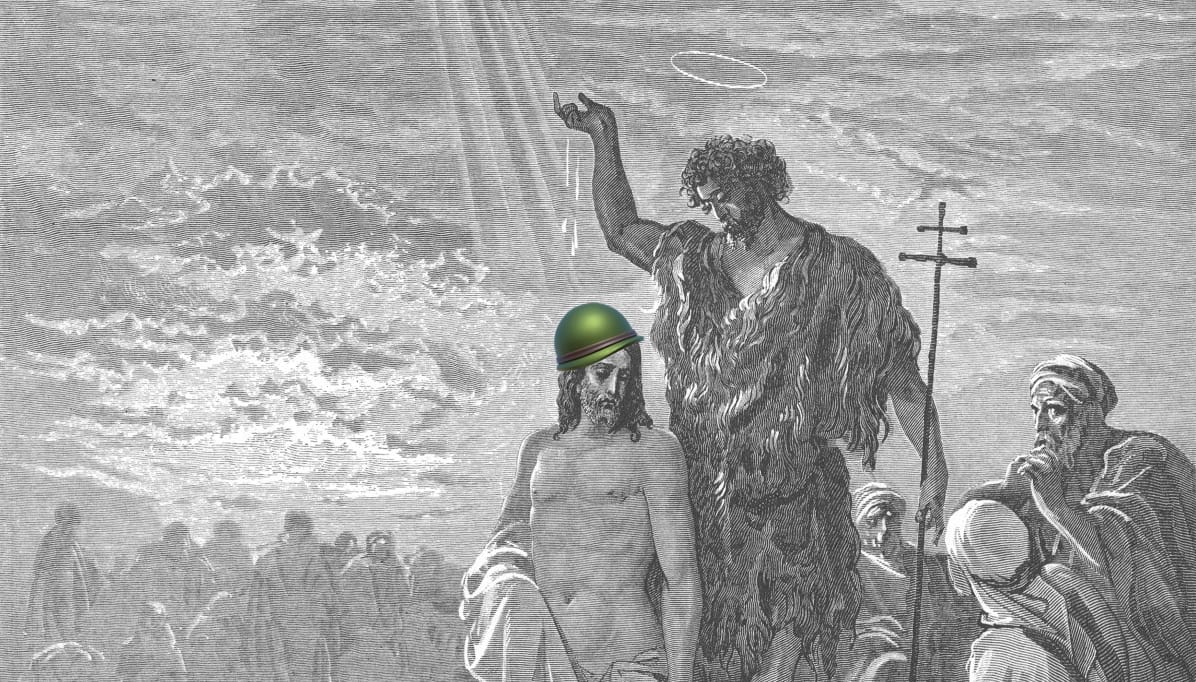
Luke wants us to remember these soldiers, these lovable scoundrels I call Rakes. When the narrative picks up in Luke 7, he specifically notes that "all the people, even the tax collectors, when they heard Joshua's words, acknowledged that God's way was right, because they had been baptized by John. But the Pharisees and the experts in the law rejected God's purpose for themselves, because they had not been baptized by John" (7:29-30). And earlier in the same verse: "the soldiers also."
The soldiers John baptized are still around. They're in the crowd listening to Joshua.
The Tension: Joshua Heals a Centurion's Servant
Right before John sends his disciples to question Joshua, something happens that would have landed hard for those baptized soldiers in the crowd: Joshua heals a Roman centurion's servant (Luke 7:1-10). Or if you harmonize with John 4, a royal official—probably Herodian, definitely establishment. I call him CPT Marvel.
The centurion doesn't even approach Joshua directly. He sends Jewish elders who vouch for him: "This man deserves to have you do this, because he loves our people and has built our synagogue" (7:4-5). Joshua commends this foreign military officer's faith—"I tell you, I have not found such great faith even in Israel" (7:9).
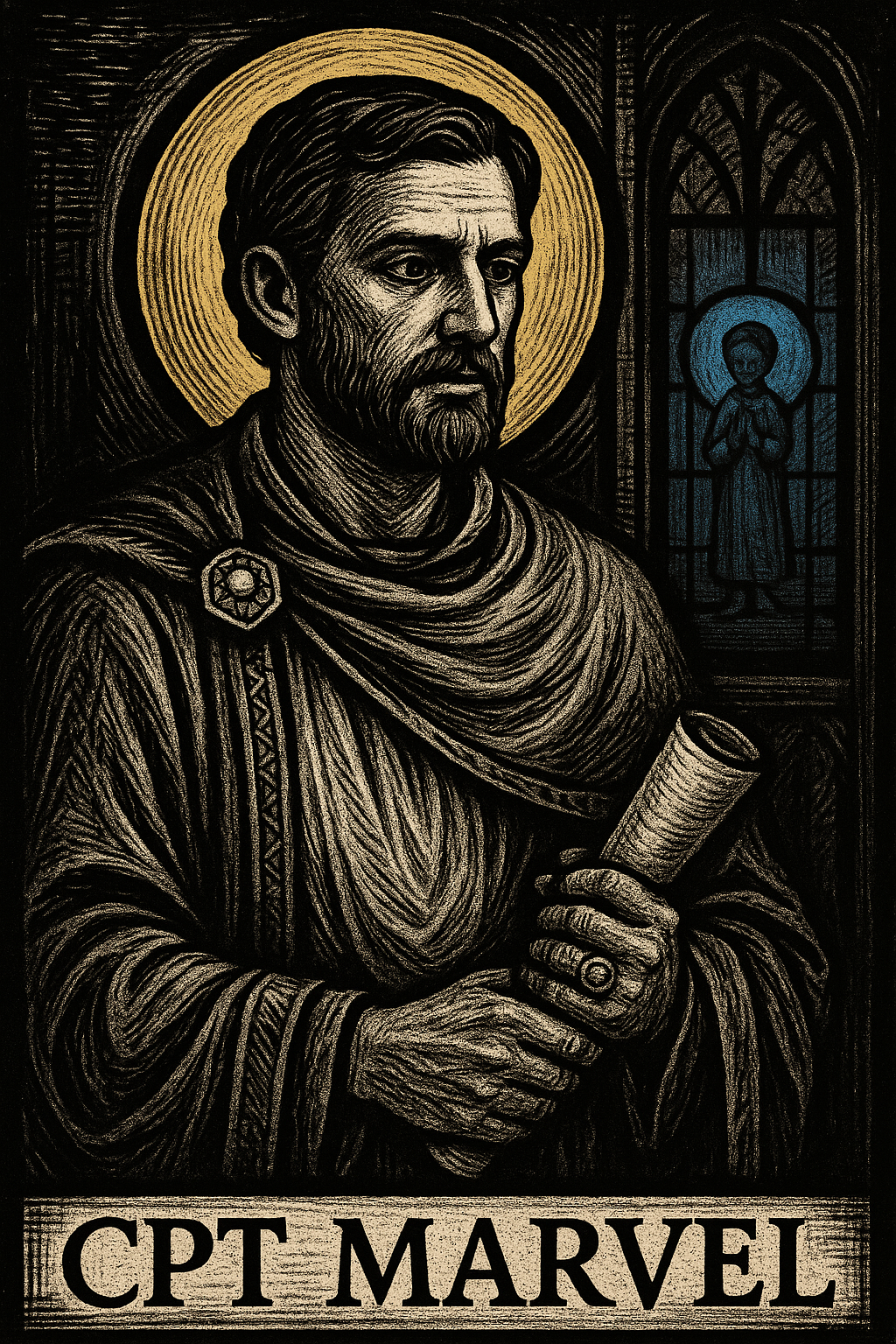
This is where the narrative gets uncomfortable if you're committed to revolutionary purity. Joshua has just elevated a representative of the occupying force as an example of faith that surpasses Israel itself. And the soldiers John baptized are watching this happen.
John's Question
Immediately after these healings—the centurion's servant and the widow of Nain's son—John sends messengers from prison with a question: "Are you the one who is to come, or should we expect someone else?" (7:19).
Most interpretations treat this as John having a crisis of faith in isolation, doubting because his circumstances are grim. But Luke's sequencing suggests something more specific. John has heard what Joshua is doing. And what Joshua is doing includes extending God's compassion to exactly the kind of people John's movement was supposed to be opposing.
Joshua' response is telling. He doesn't just say "yes, I'm the Messiah." He lists the evidence: "The blind receive sight, the lame walk, those who have leprosy are cleansed, the deaf hear, the dead are raised, and the good news is proclaimed to the poor" (7:22).
Then he adds: "Blessed is anyone who does not stumble on account of me" (7:23).
That's not random pastoral encouragement. That's a specific warning: Don't let what I'm doing become an obstacle to you.
What Joshua Says When John's Disciples Leave
After John's messengers leave, Joshua turns to the crowd—including those soldiers—and delivers a discourse about John. He validates John's prophetic edge: "What did you go out into the wilderness to see? A reed swayed by the wind?" (7:24). No. John wasn't soft, wasn't politically flexible, wasn't bending to make the powerful comfortable.
But then Joshua makes a crucial move. He positions himself as the fulfillment of what John announced, while simultaneously expanding the scope beyond John's framework. "I tell you, among all humanity there is no one greater than John; yet the one who is least in the kingdom of God is greater than he" (7:28).
Translation: John's prophetic sharpness was necessary, even exemplary. But the republic Joshua is building operates by different math. It includes people John's revolution would have kept at arm's length.
The Prophetic Impulse Softens
This is the pattern scripture gives us: the prophetic critique is essential—John names injustice, calls out complicity, refuses to baptize Pharisees who won't produce fruit in keeping with repentance. But when that same prophetic impulse meets actual people trying to live faithfully within broken systems, something has to give.
I've watched this play out in contemporary movements. Years ago, I worked with a progressive Christian organization that championed the work I was doing on veteran justice. They published multiple pieces I'd written (without pay), called the message "critically urgent," and noticed that few people were speaking to these injustices. They invited me to present at one of their gatherings.
Then they pulled the invitation. The message, they explained, was still urgent and important. But some who'd worked with me found my expectations "overbearing" and "too demanding of folks." What they wanted, they said, wasn't just a platform for the message but "a community of trusted servants committed to one another in trusting relationship."
The work was urgent enough to publish. The people it served were important enough to champion. But the actual person carrying that work, with all the sharp edges that came from living inside the tension they were analyzing from the outside, was too much.
Joshua doesn't abandon John's critique of power. He'll die because of it in a few chapters. But he refuses to make that critique the boundary marker for who receives God's mercy. The centurion gets his servant healed. The soldiers who asked John what to do get to stay in the crowd hearing good news. Even Herodian officials can be met with compassion rather than condemnation.
John ends up executed by the very Herodian power structure he opposed. Joshua follows not long after. And Psaul, when he enters the story, pulls the pendulum even further from John's early instincts—building multiethnic communities that include God-fearing soldiers, centurions who become believers, people embedded in empire who are being transformed from the inside.
Why This Matters Now
We live in a moment where ideological purity is its own form of currency. The pressure is constant: prove you're really committed by cutting off everyone who doesn't meet the standard, by refusing connection with anyone whose job or history or current compromises make them suspect.
Progressive Christian spaces are particularly susceptible to this. The language is all about justice and inclusion, but the practice often mirrors the same gatekeeping dynamics found in any other tribal space. Messages about marginalized communities are welcomed, until the actual marginalized people show up with demands, expectations, or ways of being that don't fit the curated aesthetic of the movement.
Scripture offers a different model. One that takes injustice seriously—John wasn't wrong about Herod, Joshua wasn't wrong about the religious authorities. But one that refuses to make denunciation the price of admission to grace.
The soldiers in Luke 7 didn't have to perform their way into belonging. They showed up, they heard Joshua speak, they watched him extend mercy to one of their own. And when Joshua talked about John afterward, they heard him validate both the prophet's sharpness and the kingdom's expansive welcome.
That's not compromise. That's the harder work of actually building something that can hold people whose hearts are being changed, even if their circumstances haven't caught up yet. Even if they wear the wrong uniform, work the wrong job, or come from the wrong side of history. Even if they bring complications that make the community uncomfortable.
The question John asked from prison—"Are you the one?"—wasn't answered with a theological argument. It was answered with a list of concrete acts of mercy that included the supposedly unforgivable.
Maybe that's still the answer. Not a platform that champions urgent messages while keeping messengers at arm's length. Not a community that celebrates justice for veterans until veterans actually show up. But the harder, messier work of building spaces where people can be transformed without first having to perform their worthiness.
The prophetic impulse will always be necessary. Someone has to name what's broken, call out complicity, refuse to baptize power's pretensions. But if that impulse never softens to meet actual people where they are (if it can't make room for the centurion's servant, the soldier asking what to do, the complicated ally who won't perform the right way) then it's not building the republic Joshua announced.
It's just building another gated community with better rhetoric.