
NotMyGospel: The First Cut is the Deepest


When Iraqi Peacemaking Became Celebrity Posturing
In January 2010, I returned to Iraq as a wannabe peacemaker, following what I genuinely believed was the Spirit of a living God leading me back to my (still active) theater of combat. In emails leading up to the trip, I told my fellow travelers (Greg Barrett, Shane Claiborne, Peggy Gish, Weldon Nisly, and Cliff Kindy) that I believed God was leading me. I wasn't being dramatic. I was trying to be faithful.
But I went home with nothing, save 63 pages of journal entries and 90 minutes of audio journals; shattered keepsakes of a failed attempt to encounter a living God in a wilderness of my own(?) making. I went back ready for anything and everything. Instead, I learned celebrity faith is choreographed, not improvised.
I spent weeks and months thinking Shane and I were working toward peace together, wrestling with the same questions about ethics and justice and what God requires of rank and file believers. It turns out Shane was building a platform while I was trying to build a bridge. And when those two projects came into conflict, Shane chose his platform. Greg, a journalist organizing the trip, chose his book deal. And I was chosen as their prop in a pattern I'd see repeated across progressive peace activism for the next decade.
This is the first in a series about my encounters with Celebrity Activism, how social capitalists exploit military trauma to bolster Civilian Theology while leaving veterans to deal with the consequences - including suicide - alone. But we need to start at Rutba, because that's where I learned what this machinery looks like up close.
The Setup
In July 2009, Shane forwarded my emails to Greg, the journalist "putting the Iraq trip together in an effort to write the book, The Gospel of Rutba." Greg's response was frank about what he needed: "Your insights as a military vet could be very useful." The book's agent required them to find the Rutba doctor before Greg could get an advance. I was "useful."
I was also hesitant. I told Greg, Shane, and Jonathan Wilson Hartgrove (who had to withdraw at the last minute) that Iraq wasn't abstract for me - "there will be no shortage of tears on my end." I wrote that I had "a nagging suspicion it would be profoundly healing to go back." Looking back at that email now, I can see what I couldn't then: I was describing spiritual discernment while they were assembling cast members.
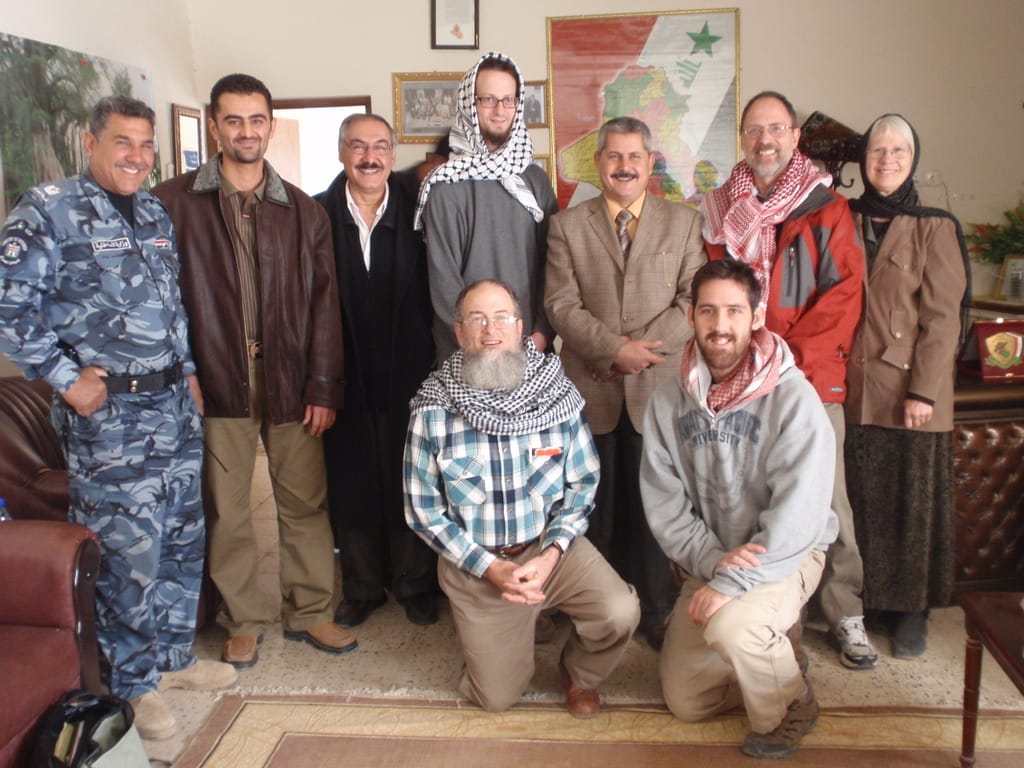
Before I even got on the plane, I recorded my second living will and testament since leaving the Army and recorded myself reading it to a battle buddy so it would have legal credibility. The first had been for a trip to Palestine where organizers feared I'd be mistaken for Israeli intelligence and captured to extract righteous vengeance. I knew hospitality and reconciliation couldn't be earned or expected - only offered and received as gift. I knew I might come home with nothing. Or not come home at all.
The Silencing
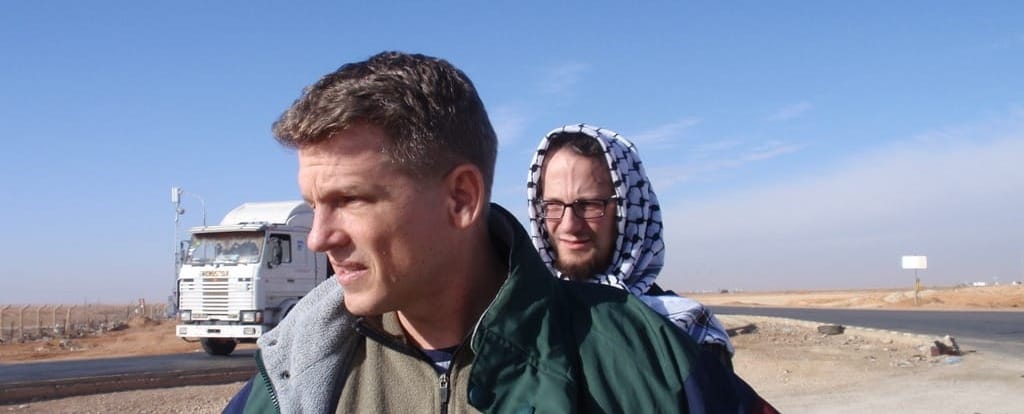
Here's what I didn't anticipate: despite my open discernment with the group, I made it to Jordan before Greg decided to tell me that my identity would "endanger too many lives not our own." The security concerns were real - these were the same Iraqis who'd been victims of the violence I'd participated in. But the decision to silence me wasn't made with me. It was made for me, despite my being vulnerable, by civilians who had never and would never carry the moral weight I was trying to redistribute.
Shane reminded me in Jordan, as I wrestled with why I'd come, that the work of reconciliation is messy and the timing isn't always what we want. He was right about that. What he didn't tell me - what he never told me - was that while I was being distrusted and prohibited from being myself, he and Greg were already planning how to market the trip as "genuine" reconciliation.
In March 2011, Greg pitched the book to publishers describing it as a project "that [Shane is] working on with me." I didn't appear in that pitch as a collaborator. I appeared as texture: "the fact that you returned [to Iraq] unarmed only as a peacemaker who could not reveal his full identity because of the violence already inflicted on Iraqis, is significant."
My silence was important to them. My presence was useful, to them. But my voice? That was expendable (to them).
The Appropriation
I journaled the entire trip and shared them privately with the group in March 2010, explicitly stating: "I do ask that you do not replicate in any way the images or text you read or hear. These are, after all, personal journals."
In February 2012, as Greg was rushing the book to press, I wrote again: "I shared them in confidence with you and the others without any desire to have them publicly released... I shared my journals with you in the hopes of giving you a glimpse into what was going on in my head, not to be used publicly."
Greg's response? "Production right now is on the fast track. Lengthier discussions and digging deeper is out of the question. However, if you want to reopen your journals for use, your own thoughts and words written and recorded from the 2010 trip, that could maybe add some depth."
Time pressure as coercion. My intimate reflections on trauma positioned as a favor to Greg's commercialized narrative. Classic civilian privilege.
The Language
I warned them repeatedly. In December 2010, a few months into formal theological education, I shared a quote from my journals with Greg: "Reconciliation may indeed produce handshakes and hugs and the tears of reunion, but without confrontation and corrective action it is an empty gesture."
I told him directly: "The use of the term 'reconciliation' for the January trip may come across poorly to Iraqis or other victims of US military occupation. We need to be very selective in the language used." I referenced how even well-intentioned gestures from veterans had been considered offensive by Iraqis who were actually dealing with ongoing occupation.
I wrote in my journals, in my most raw moments on a hospital rooftop in Rutba: "Hope sells, grief don't! ...maybe this is a bridge I'm not allowed to help build."
Greg quoted that line in the book. But here's what he left out - what I wrote immediately before it: "So much shit went through my head on the roof. I made 2 or 3 audio journals. Don't know if I have my emotions figured out yet, or if I ever will."
They wanted the grief for texture. They didn't want the ongoing work of actually processing it.
The Pattern
Shane Claiborne was the first person to exploit my military service for his benefit while using the language of peace and justice to dress it up for his own private audience. Greg Barrett was explicit about wanting to "write for the mortgage." But Shane? Shane made me think we were in it together.
In 2009, he was collecting letters from soldiers for a possible book project but turned down suggestions that we write together. By 2011, while I was still processing what had happened in Rutba, he was launching "Red Letter Christians" and expanding his speaking circuit. The Rutba story became part of his repertoire. I became part of someone else's testimony tour.
In June 2012, two years after the trip, I told Shane as directly as words allowed: "I don't think I've felt very well heard in this years-long chain of events... I feel like an outlier or something, looking in from the outside, very aware of my status as an afterthought to the progression of greg's ambition with the book."
Shane's response didn't matter. Not because he didn't have one, but because it didn't change his behavior. Nothing I said or did, across a decade of "friendship," seemed capable of reaching the human being behind the influencer.
What This Teaches Us
Rutba showed me that progressive peace activism has its own machinery of exploitation that claims to "support the troops" without actually centering veteran voices. The machine is fueled by the same colonialist instinct it claims to oppose: extract what's useful, simplify what's complex, and move on to the next speaking engagement.
The celebrity activist industrial complex cites suicide statistics to boost influencer profiles while contributing nothing to actual suicide prevention. The organizations Shane trafficked my street cred to were used to veterans who cried on cue wouldn't bother them when the cameras turned off. I didn't always behave how they wanted me to, so the speaking invitations stopped coming.
Shane Claiborne taught me what this machinery looks like when it wraps itself in the language of the gospel. He showed me that someone can talk about Jesus and enemy love and living simply, and still use another human being as a prop in their theological project. He taught me that silence can be imposed not just by orders and security concerns, but by people who claim to want your liberation while ensuring you can't speak for yourself unless they can be there to filter you.
I've seen an alternative reality; one that doesn't rely on celebrity spokespeople, that doesn't flatten military experience into easily digestible narratives, that doesn't ask veterans to be silent props in civilian savior stories.
But we had to start here. Because Iraq showed me that progressive activism is no less dangerous than patriotic exploitation - it's just harder to see coming when it's wrapped in peace signs and fake hugs.