GruntGod 2.2.4: From Lamb to GOAT
Why the New Testament Gets Sacrifice Wrong
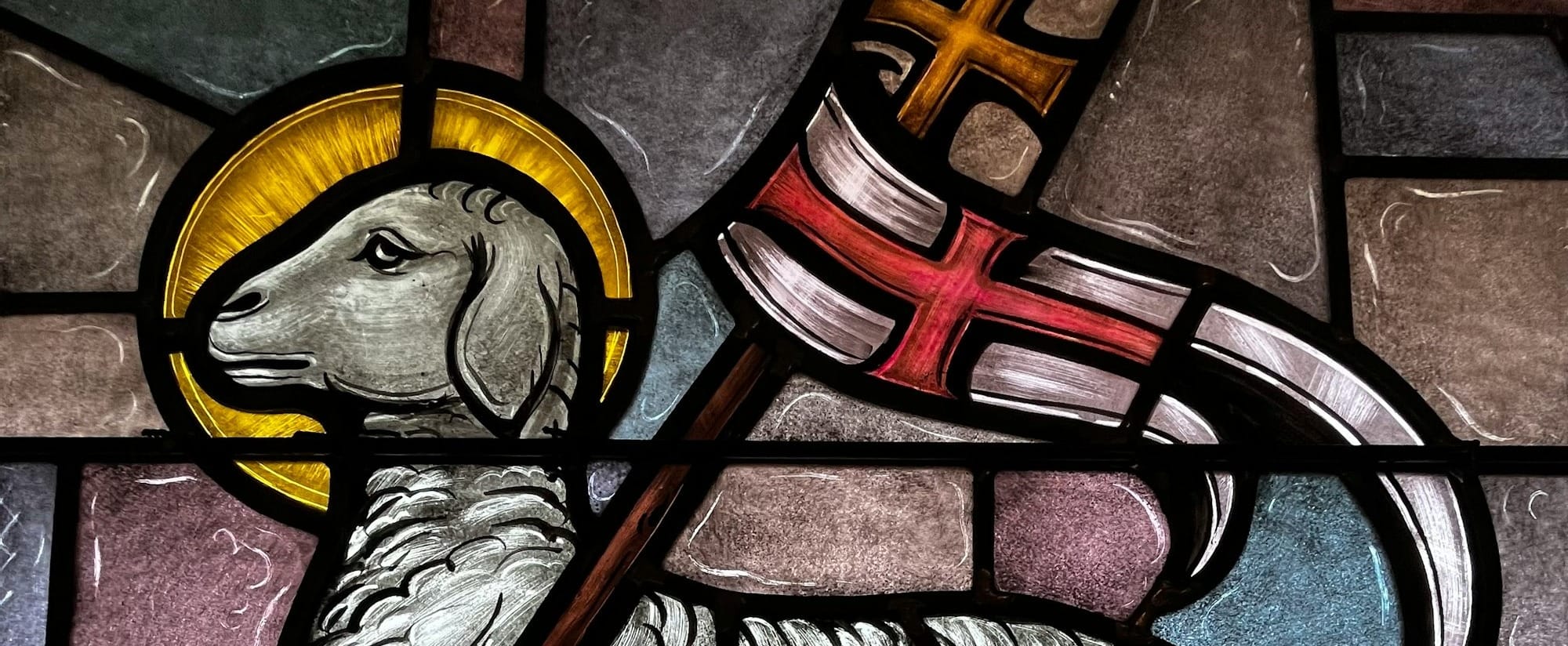
Christians love the "Lamb of God who takes away the sin of the world" (John 1:29). It's beautiful imagery—pure, innocent, meek Jesus. There's one problem: the Hebrew Bible never calls the Passover sacrifice a baby sheep. And "taking away sin" belongs to Yom Kippur's goat, not Passover's calf.
This is the final post in my Moses chapter series from God Is a Grunt (2nd edition), and it's the theological payoff: God isn't the lamb. God is the GOAT.
John's Theological Confusion
John's gospel uses Greek words particular to baby sheep. But Exodus never specifies sheep, just a young, unblemished male calf from "the sheep or from the goats" (Exod. 12:5). The Passover sacrifice could be a baby bovidae of either the wool-producing, human-dependent or the smelly, cantankerous, no-fµ¢ks-to-give families.
More problematic: taking away sin isn't Passover theology—it's Yom Kippur. Passover blood marks protection from death. The Yom Kippur scapegoat carries away sin. John mashes these holidays together, and not necessarily in a clean cut way.
When other New Testament writers address sacrifice, they get it right. Paul mentions "our Passover" without specifying sheep (1 Cor. 5:7). Hebrews follows Leviticus by mentioning goats when discussing atonement (Heb. 9:12–13, 19; 10:4). John stands alone insisting on sheep for his imagery.
Why does this matter? Because sheep and goats symbolize fundamentally different things.
The Sheep-Goat Divide
Matthew uses sheep and goats to illustrate good versus evil (Matt. 25:32). They're that different symbolically.
Sheep eat grasses and weeds, limiting their range. They depend on shepherds for safety. Their valuable wool requires shearing, creating symbiotic relationship with humans. Docility is a quality valued by the Entitlement theology of substitutionary atonement; WE determine your story, not you.

Goats have eclectic diets, making them independent and agile. They don't need people. While sheep have scent glands in feet and face, goats smell awful—glands beside their butt holes. They're ornery, disheveled, low-class critters for low status types like Mary and her "illegitimate" son. (Spoiler Alert: every child is legitimate)
John prefers sheep because highbrow Christianity demands sacrificial victims "led like a lamb to the slaughter," "silent" before shearers (Isa. 53:7 NIV). Docile. Cooperative. White, like us. But not us.
The sweet, simple lamb always turned me off as a young soldier. I wasn't silent or docile. And most of the grunts I felt most comfortable around weren't White.
God Is the GOAT
Here's the good news: if Joshua+ takes away sin, then God is the goat of Yom Kippur, not the lamb of Sunday school.
God is the slaughtered goat whose blood stains the high priest's hands. AND God is the scapegrunt who carries our sins into the wilderness. Both goats. Both fates. Slaughtered and exiled. Consumed by both fire and wilderness.
When Caiaphas says "it is better to have one person die for the people" (John 18:14), he's evoking Yom Kippur during Passover—combining two Jewish holidays to make Good Friday. Joshua+ suffers both goats' fates so we don't have to. John tries to make sense of this mashup of holidays, but does so clumsily. He reinstates the Privilege of the few by mixing his metaphors and suggesting victims have to be pure and perfect.
The perceived low class of goats isn't theologically disqualifying. The punchy, no-nonsense herd animals are just as sacred as highbrow, cutesy sheep. More sacred, actually, because they're what Leviticus actually specifies for removing sin. God is the GOAT—the Greatest Of All Time.
What This Means for Grunts
The silent, stoic charade is unnecessary. You don't have to be a docile lamb to be sacred. Goats are ornery, disheveled, and dangerous, like most soldiers and veterans I've met.
American Christianity demands sacrificial victims be manageable—grateful for "support," quiet about injuries, cooperative. But if God is a goat, grunts don't have to play lamb. You can be cantankerous. You can smell bad. You can butt heads with the system. Isn't that what Joshua+ does by turning the temple tables?

The biblical sacrificial system uses goats because they're what God provides, not because they're prestigious. God is as comfortable being the lowbrow goat as the highbrow sheep—maybe more comfortable, given what Leviticus actually says.
When John insists on lamb imagery, he's doing what civilian Christianity still does: retconning messy reality into tidy narratives. Lambs are easier to control. Lambs don't talk back or challenge the system.
But God didn't choose to be a lamb. The Hebrew Bible chose goats for removing sin. You don't have to be docile about it. I mean, you CAN, but don't let anybody tell you that you have to.
This concludes the blog series drawn from the Moses chapter of "God Is a Grunt" (2nd edition). The full chapter examines Levitical sacrifice and TYFYS in depth.